






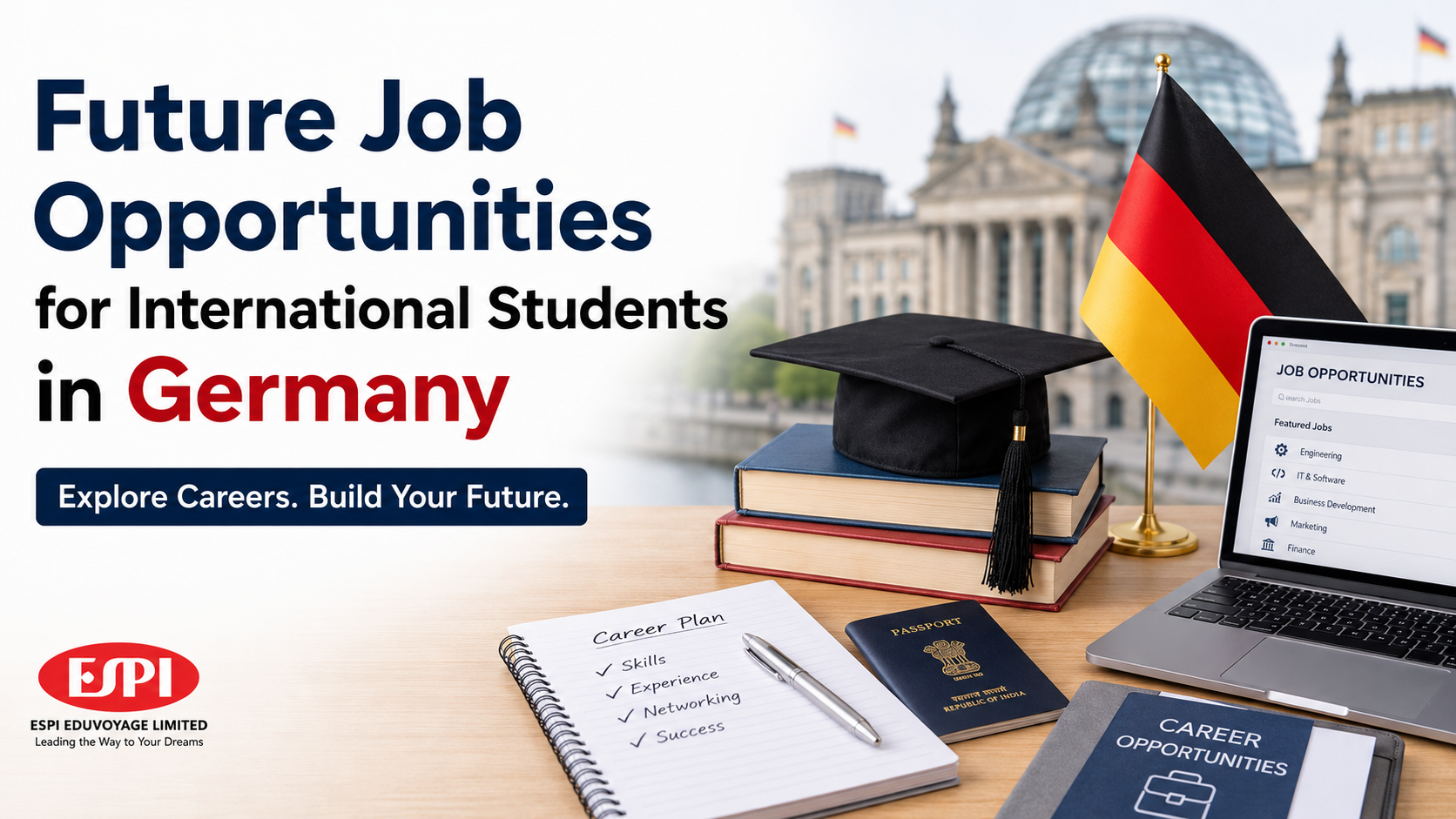
Germany is more than a study destination—it can be a launchpad for an international career.
For students considering studying abroad, Germany stands out for its combination of high-quality education, strong industrial base, research opportunities and demand for qualified professionals. Germany’s official skilled-worker portal highlights areas including IT, engineering, healthcare and other technical professions as important areas of demand.
For international students, this creates an attractive pathway: Study → Gain experience → Find qualified employment → Build a career in Germany.
Why Germany Has Strong Career Potential
Germany is Europe’s largest economy and has a broad employment market covering manufacturing, automotive, engineering, technology, healthcare, finance, logistics, energy and research.
The country’s demand for skilled professionals is particularly relevant to international graduates with specialised qualifications. Germany’s Federal Government portal states that international students are an important source of future skilled workers, with around 45% staying long term after studying. More than half of international students choose engineering or natural-science subjects.
This makes Germany particularly interesting for students who choose programmes aligned with industry demand.
1. Information Technology & Artificial Intelligence
Germany’s technology sector offers opportunities across:
- Artificial Intelligence
- Data Science
- Software Development
- Cloud Computing
- Cybersecurity
- Machine Learning
- IT Consulting
- Digital Transformation
Germany’s official skilled-worker portal specifically identifies IT specialists as an in-demand group and notes that IT jobs are available across start-ups, SMEs, large companies and the manufacturing sector.
Popular Master’s options
MSc Computer Science | MSc AI | MSc Data Science | MSc Cybersecurity | MSc Software Engineering
2. Engineering & Advanced Manufacturing
Engineering remains one of Germany’s biggest career strengths.
International graduates can explore careers in:
- Mechanical Engineering
- Electrical Engineering
- Automotive Engineering
- Mechatronics
- Industrial Automation
- Robotics
- Manufacturing
- Semiconductor technologies
Germany’s industrial ecosystem provides opportunities ranging from global corporations to highly specialised Mittelstand companies.
Popular Master’s options
MSc Mechanical Engineering | MSc Electrical Engineering | MSc Mechatronics | MSc Robotics | MSc Automotive Engineering
3. Automotive & Electric Mobility
Germany is globally recognised for its automotive industry, but the sector is evolving rapidly.
The shift towards electric vehicles, autonomous driving, connected vehicles and intelligent manufacturing is creating demand for new technical skills.
Students combining automotive knowledge with electronics, software, AI, robotics or battery technology can position themselves for emerging roles.
Potential career areas
Battery Technology
Electric Mobility
Autonomous Systems
Automotive Software
Vehicle Electronics
Smart Manufacturing
4. Renewable Energy & Sustainability
Germany’s transition towards a more sustainable energy system is creating opportunities in areas such as:
- Renewable energy
- Energy systems
- Wind and solar
- Energy efficiency
- Hydrogen
- Environmental engineering
- Sustainable manufacturing
This is particularly relevant for graduates interested in combining engineering with climate and sustainability solutions.
5. Healthcare & Life Sciences
Healthcare is another important area of skilled-worker demand.
Career opportunities can extend across:
- Biotechnology
- Pharmaceutical sciences
- Biomedical research
- Medical technology
- Healthcare management
- Nursing and allied health professions
For regulated healthcare professions, however, professional recognition and licensing requirements apply, so students should check the requirements for their specific occupation.
6. Supply Chain & Logistics
Germany’s position as a major European manufacturing and trade hub creates opportunities in:
Supply Chain Management • Logistics • Procurement • Operations • Manufacturing Planning • Transportation
Students with business or engineering backgrounds can consider specialised master’s programmes in supply chain, logistics and operations.
7. Business, Finance & Management
Germany also offers opportunities for graduates in:
- Finance
- Business Analytics
- International Business
- Management
- Consulting
- FinTech
- Marketing
- Operations
For stronger employability, students should consider combining traditional business education with data analytics, technology, finance or supply-chain skills.
What Happens After Graduation?
One of the major advantages for international students is the opportunity to remain in Germany after completing their studies and look for qualified employment.
According to the German government’s official portal, graduates from countries outside the EU can obtain a residence permit for up to 18 months to look for qualified employment after successfully completing their studies in Germany. During this period, they can work in any type of job while searching for qualified employment.
Once graduates secure suitable employment, they may be eligible for a residence permit for qualified employment or, where applicable, an EU Blue Card.
Can Students Work While Studying?
Yes. International students can work alongside their studies, subject to the applicable rules.
Germany’s current rules allow third-country students to work up to 140 full days or 280 half-days per year, or alternatively up to 20 hours per week under the student-employee arrangement.
Part-time employment can help students:
 Gain professional experience Build a German network Improve communication skills Understand workplace culture Strengthen their CV
Is German Language Necessary?
Not always—but it can make a significant difference.
Students can find English-taught master’s programmes and some international companies operate extensively in English. However, German language skills can expand the number of employers and roles available, particularly in customer-facing, regulated and traditionally German-speaking workplaces.
Our recommendation:
Don’t wait until graduation.
Start learning German during your master’s degree.
Even reaching an intermediate level can help students integrate into the workplace and everyday life.
The Future: Which Skills Will Matter Most?
For students planning their careers in Germany, simply having a master’s degree may not be enough.
The strongest profiles are likely to combine a formal qualification with specialised technical and practical skills.
Future-ready combinations:
AI + Data Science
Cloud + Cybersecurity
Automotive + AI
Robotics + Mechatronics
Electrical Engineering + EV Technology
Engineering + Renewable Energy
Business + Data Analytics
Supply Chain + Digitalisation
Germany: Study Today, Build Your Career Tomorrow
Germany offers international students more than a degree.
It can provide an opportunity to:
Study at recognised universities
↓
Gain practical experience
↓
Search for qualified employment after graduation
↓
Build an international career
The German government’s official portal also provides job-search resources and a dedicated job exchange for international professionals.
Thinking about studying in Germany?
At ESPI Eduvoyage, students can receive guidance on:
University & course selection
Eligibility assessment
Scholarships & funding
Admission process
Visa guidance
Career-oriented course selection
Your German degree could be the beginning—not the end—of your international career.
Career outcomes depend on the student’s qualification, skills, German-language ability, work experience, location and the prevailing labour market. Immigration and employment rules can change, so students should verify current requirements before making decisions