





Key Takeaways
- UK's 2026 policy changes emphasize responsible recruitment and genuine student progression for those planning to study in United Kingdom.
- Selecting a licensed institution is crucial for students aiming to study abroad in United Kingdom.
- Students must ensure their chosen course and university meet UK sponsorship requirements before applying for a Student visa.
- Current guidelines allow eligible graduates to stay in the UK for up to two years post-study if they apply on time.
- Planning for 2026 requires careful consideration of course fit, documentation, and shifting immigration rules.
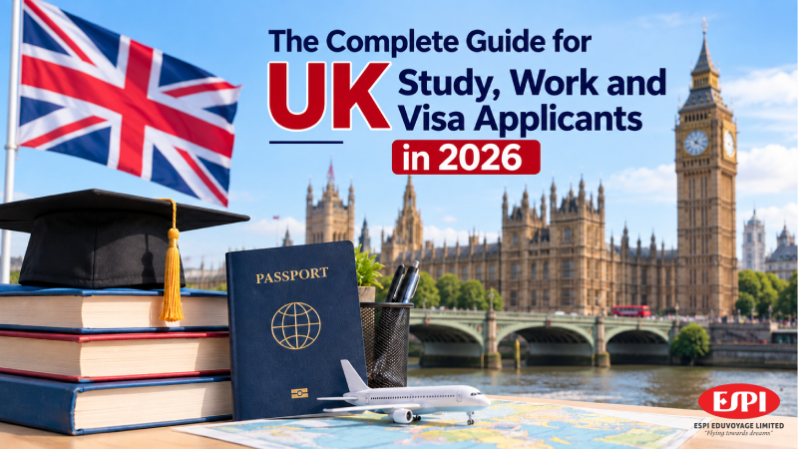
ESPI Visa Consultants is a leading provider of overseas education and visa consultancy services. For students planning to Study in United Kingdom in 2026, recent UK policy changes have made student recruitment and sponsor compliance more closely monitored. The focus is not simply on attracting international students, but also on responsible recruitment and genuine academic progression.
For prospective students, this does not mean the UK is closed to international education. It means applicants should pay closer attention to their choice of institution, course, documentation and overall study plan.
What Has Changed in UK International Student Recruitment?
In June 2026, the UK government announced stronger sponsorship measures for universities that fail to recruit international students responsibly. Under the announced approach, institutions could face penalties, including losing the ability to recruit international students, where high levels of student dropout or related compliance concerns are identified.
This marks a stronger emphasis on the responsibilities of universities and other student sponsors. For students, the message is straightforward: choosing a properly licensed and compliant institution matters more than ever.
The 2026 environment places greater importance on genuine students enrolling on suitable courses and progressing through their studies.
What Does This Mean for Students Planning to Study in the UK?
Students considering Study in UK programs should look beyond university rankings or course names. The institution sponsoring the student visa must meet UK requirements, and the student needs an unconditional offer and a Confirmation of Acceptance for Studies, commonly called a CAS, before applying for the visa.
The current Student route remains available for eligible students aged 16 and above who have been offered a place by a licensed student sponsor and meet the applicable requirements.
This makes institution and course selection an important part of the application process, rather than a decision to make after admission.
Why University Selection Has Become More Important
The UK’s tighter approach to international recruitment puts additional attention on the relationship between universities and their international student populations.
When selecting a university, students should consider whether the institution:
- Holds the appropriate Student sponsor licence
- Offers the course level and subject they actually want to study
- Provides a clear academic progression route
- Has suitable course delivery and support arrangements
- Can issue a valid CAS for an eligible student
GOV.UK states that the education provider must be a licensed student sponsor, and the CAS is required for a student visa application.
For applicants planning Study Abroad in United Kingdom programs, these checks can help create a more informed shortlist.
The Student Visa Requirements Still Matter
The recruitment changes should not distract students from the standard Student visa requirements. Applicants still need to meet the eligibility conditions associated with the student route.
Depending on the individual case, applicants may need to provide:
- A valid passport or other accepted travel document
- A CAS issued by the education provider
- Evidence of sufficient funds where required
- Evidence of English-language ability where required
- A valid ATAS certificate where the course and applicant’s circumstances require one
- A tuberculosis test result where applicable
The official Student visa guidance confirms that additional documents can be required depending on the applicant’s circumstances.
A complete application should therefore be prepared around the applicant’s actual circumstances rather than relying on a generic document list.
Are All International Students Affected by the Same Restrictions?
No. One important point for prospective students is that some of the 2026 changes apply only to particular nationalities or visa routes.
For example, the UK introduced a visa brake affecting Student visa applications made outside the UK by main applicants who are nationals of Afghanistan, Cameroon, Myanmar and Sudan. Applications from other nationalities are not affected by this specific restriction.
For Indian students, this particular visa brake does not apply based on nationality. However, applicants should still check the latest official requirements before submitting an application because UK immigration rules can change.
What About Dependants?
Family plans also need careful consideration. Current Student visa rules limit dependant eligibility for many students. In general, eligible dependants can accompany certain government-sponsored students and students on qualifying postgraduate research-level courses that meet the relevant conditions.
Therefore, students considering Study Abroad in United Kingdom should not automatically assume that a spouse or children can accompany them simply because they hold a Student visa.
The course type, level and sponsorship circumstances can affect whether dependant applications are permitted.
Another Change Students Should Know About: Graduate Visa Duration
Students should also consider what happens after graduation when planning their UK education route.
According to current GOV.UK guidance, the Graduate visa will allow eligible graduates to remain in the UK for two years when they apply on or before 31 December 2026.The usual duration will be eighteen months for applications submitted on or after January 1, 2027. Doctoral graduates can receive three years.
This is relevant when comparing courses and planning a longer-term academic and career strategy.
Post-study options should be checked against the rules that apply when you actually become eligible to apply, rather than relying on older information.
How Students Should Approach Their 2026 Applications
The tighter recruitment environment makes a structured application process particularly useful. Students can approach their planning in the following order:
- Identify the right course based on previous education, subject interests and career objectives.
- Shortlist licensed student sponsors and review the courses they offer.
- Check entry requirements and prepare academic and English-language evidence.
- Review visa requirements based on nationality and personal circumstances.
- Confirm the CAS and application documents before submitting the Student visa application.
- Review current immigration rules again before travel because requirements can be updated.
The official Student visa guidance currently states that applicants from outside the UK can apply up to six months before their course start date.
What This Means for Indian Students
For Indian students, the 2026 policy environment calls for careful planning rather than unnecessary concern. The UK continues to have a student visa route for eligible international applicants, but universities are facing stronger expectations around international recruitment and compliance.
Students should therefore focus on academic fit, credible institutions, accurate documentation and a study plan that makes sense for their background.
Working with experienced United Kingdom Study Abroad Consultants can also help students understand how university selection, admission documentation and visa requirements fit together.
Why Choose Us
At ESPI Visa Consultants, we focus on helping students make informed decisions about their overseas education plans. Our approach covers course and university selection, application preparation and visa-related guidance based on the student’s individual profile. With UK immigration and student recruitment policies receiving greater attention in 2026, we help our applicants understand the current requirements before they move forward. Our goal is to make the process clearer, more organised and aligned with the student’s academic plans.
Conclusion
The UK’s 2026 international student recruitment changes reflect a stronger focus on responsible university recruitment and sponsor compliance. For students planning to Study in United Kingdom, the biggest takeaway is to choose an appropriate licensed institution, select a suitable course and prepare accurate visa documentation. The Student route remains open to eligible international students, but applicants should keep track of nationality-specific restrictions and changing post-study rules.
Students who are serious about Study in UK plans should begin with current, reliable information and a clear academic strategy rather than relying on outdated advice.
Planning your UK education for 2026? Speak with ESPI Visa Consultants for guidance on course selection, university applications and the Student visa process.
Call: +91 7211117272
Email: enquiry@espiconsultants.com
Frequently Asked Questions
What are the new rules for international students planning to study in the United Kingdom in 2026?
In 2026, the UK government is implementing stricter sponsorship measures for universities, emphasizing responsible recruitment and genuine academic progress. Institutions that do not comply may face penalties, including losing their ability to recruit international students.
How can students ensure they select the right university to study in UK?
Prospective students should choose universities that hold a valid student sponsor licence, offer the desired course, and ensure they can provide a Confirmation of Acceptance for Studies (CAS). Focusing on compliant institutions is crucial due to the tightened regulations.
Are there specific requirements for the Student visa application in the UK?
Yes, applicants need to submit a valid passport, a CAS from a licensed institution, evidence of sufficient funds, proof of English-language ability, and additional documents based on individual circumstances. Meeting the eligibility conditions for the student route remains essential.
What should Indian students consider under the new UK study abroad policies?
Indian students must focus on academic fit, choosing credible institutions, and ensuring their documentation is accurate. Despite some restrictions, a legitimate student visa route remains available, urging careful planning and compliance with the latest policies.
Can dependants accompany students on a Student visa in the UK?
Eligibility for dependants varies based on the type of course and sponsorship. Generally, only certain government-sponsored students and those in qualifying postgraduate research programs are allowed to bring dependants, so it’s important to check specific eligibility criteria before applying.